Last updated: September 27, 2026
Most people who need a Canada visitor visa come from the same part of the world: India, Pakistan, Nigeria, the Philippines, Bangladesh. And most of them will tell you the same thing — the form itself was the easy part. The hard part was proving, on paper, that they would actually go home.
That is what this guide is really about. Canada’s visitor visa — officially the Temporary Resident Visa, or TRV — is decided almost entirely on documents. A visa officer in a processing office thousands of kilometers away reads your file and answers one question: is this person a genuine temporary visitor? Below are the requirements in plain language, the exact government fees (checked against IRCC’s official fee list on the day of writing), the documents that matter, realistic processing times, and the refusal patterns an immigration lawyer flagged in 2026.
Do you need a visitor visa, an eTA, or nothing at all?
Canada runs different doors for short visits, and applying for the wrong one wastes weeks. Which door is yours depends on your passport and how you travel.
| Document | Who it is for | Government fee | Typical use |
|---|---|---|---|
| Visitor visa (TRV) | Citizens of visa-required countries — most of Asia, Africa, Latin America, and parts of Eastern Europe | CAD $100 + $85 biometrics | Tourism, family visits, business trips; stays up to 6 months per visit |
| eTA | Citizens of visa-exempt countries flying to Canada | CAD $7 | Short visits, no biometrics needed |
| Super Visa | Parents and grandparents of Canadian citizens or permanent residents | CAD $100 + $85 biometrics | Long family visits; stays up to 5 years per entry |
| Transit visa | Travelers passing through Canada to another country | No fee | Airport transit under 48 hours |
A Nigerian, Pakistani, or Indian passport holder needs the full TRV with biometrics, and US citizens are exempt from both. Transit passengers from visa-required countries should check the transit visa rules — it is free but still requires an application. There is no embassy interview in the Canadian process; the decision is made on your documents. Our guide to the US B1/B2 visitor visa covers how that system compares.
IRCC’s own 2026 overview names China and India as the two largest visa-required source countries, which is one reason application volumes — and scrutiny — stay high.
What the officer has to believe
Canada’s immigration law sets out the test in plain terms. To grant a TRV, the officer must be satisfied that:
- You will leave Canada when your visit ends.
- You have enough money to support yourself — and your family, if they travel with you — and to get home.
- You will not work or study in Canada unless authorized. Short courses of six months or less are allowed without a study permit, but anything longer needs one.
- You are law-abiding with no criminal record, and you are not a risk to Canada’s security.
- You are in good health. For a visit of six months or less, a medical exam is usually not required.
- You will provide any additional document the officer asks for to establish that you qualify.
None of this is a tick-box exercise. Officers weigh the whole file, and the pieces have to agree with each other. An invitation letter from your cousin in Mississauga helps, but on its own it proves nothing — a point one immigration channel made bluntly in a 2026 video aimed at African applicants: an invitation letter alone does not automatically prove that you qualify. What matters is whether your purpose, your money, and your ties to home tell one consistent story.
Two hard boundaries: a visitor visa does not authorize work of any kind — if your real plan involves a job or a degree, you need the right permit from the start (see our Canada student visa guide for the study route). And if you have ever been granted Canadian permanent residence, IRCC cannot issue you a visitor visa at all.
A five-question self-check before you pay
Run through these honestly before you spend a dollar.
Can you show a clear reason for this trip, with dates and places? “Tourism” with no plan is weak. “Five days in Toronto, staying with my sister, with a day trip to Niagara Falls on the 14th” is a story the officer can picture and verify.
Can you show the money — not just a balance, but a pattern? Three to six months of statements should show income coming in and normal life going out. A large deposit the week before you apply is a red flag, not a strength; officers see borrowed funds constantly.
Can you show why you must return? A job with approved leave, a business, property, family, ongoing studies — these are your anchors. The stronger they are, the less the officer has to take on faith.
Is everything in your file consistent? Names, dates, cities, and amounts must match everywhere: the form, the bank statements, the employment letter, the invitation. One contradiction multiplies every other doubt.
Have you declared everything? Past refusals, past travel, any criminal history. Hiding something is treated as misrepresentation, which is far worse than the thing you hid.
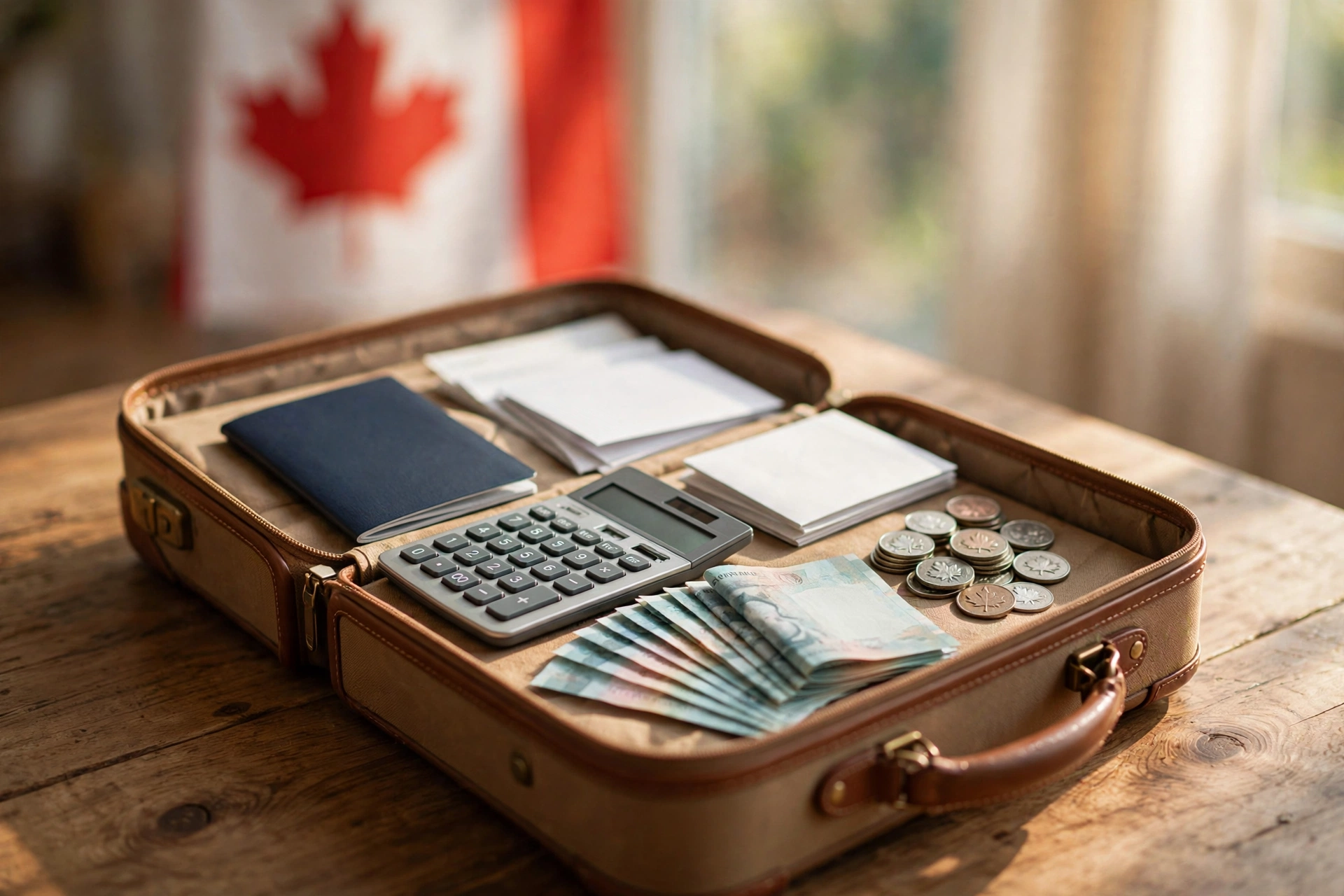
The fees, itemized
These are IRCC’s official fees, taken from the Government of Canada’s fee schedule. All amounts are in Canadian dollars.
| Item | Fee (CAD) |
|---|---|
| Visitor visa, per person — single or multiple entry (IRCC decides which you get) | $100 |
| Visitor visa, family of 5 or more applying together | $500 (maximum) |
| Biometrics, per person | $85 |
| Biometrics, family of 2 or more applying together | $170 (maximum) |
| Transit visa | No fee |
| Super Visa (parents and grandparents) | $100 |
Three things people miss. First, the $100 is the same whether you receive a single-entry or a multiple-entry visa — you do not choose; the officer does. Second, biometrics (fingerprints and a digital photo) are required for most applicants aged 14 to 79, and they stay valid for ten years, so you do not pay the $85 again on your next application inside that window. Third, none of it is refundable — not if you are refused, not if you withdraw. If you are refused and apply again, you pay the full amount a second time.
What that looks like in practice:
| Scenario | Total government fees |
|---|---|
| One adult | $100 + $85 = $185 |
| A couple applying together | $200 + $170 = $370 |
| Two adults and three children | $500 (capped) + $170 (capped) = $670 |
These are government fees only. If you use an immigration consultant, their charges sit on top — and no consultant can guarantee approval, whatever they promise.
The documents that actually move the needle
IRCC’s document checklist (form IMM 5484) is the official list, and the exact requirements vary by visa office, so use your country-specific checklist as the final word. This is the core file most applicants need.
Identity and forms
A passport valid for your whole stay, the completed application form (IMM 5257), the family information form, and passport photos that meet IRCC’s specifications. Anything not in English or French needs a certified translation — an untranslated document might as well not exist.
Purpose of visit
A day-by-day itinerary with cities, dates, and realistic activities; hotel bookings you can actually verify; and, if you are visiting people, their details. Keep every booking genuine — consulates re-check reservations, and cancelled or dummy bookings are a well-known refusal trigger.
Money
Bank statements for the last three to six months showing your real financial pattern: salary or business income coming in, normal spending going out. Add salary slips, tax returns, and proof of assets where relevant. If someone in Canada is sponsoring the trip, include their statements plus a signed letter and proof of the relationship.
Ties to home
An employment letter stating your position, salary, approved leave dates, and expected return date carries real weight. Business owners add registration documents; everyone adds what applies — property papers, marriage or birth certificates, proof of ongoing studies.
Travel history
Copies of previous visas and entry stamps. Every trip you completed and returned from on time is evidence in your favor — it is the closest thing to proof that you leave when you say you will.
Invitation letter, if visiting family
A signed letter from your host with their name, address, status in Canada, your relationship, and the purpose and length of the visit, plus a copy of their proof of status. Useful — but remember it is support, not a substitute, for your own evidence.
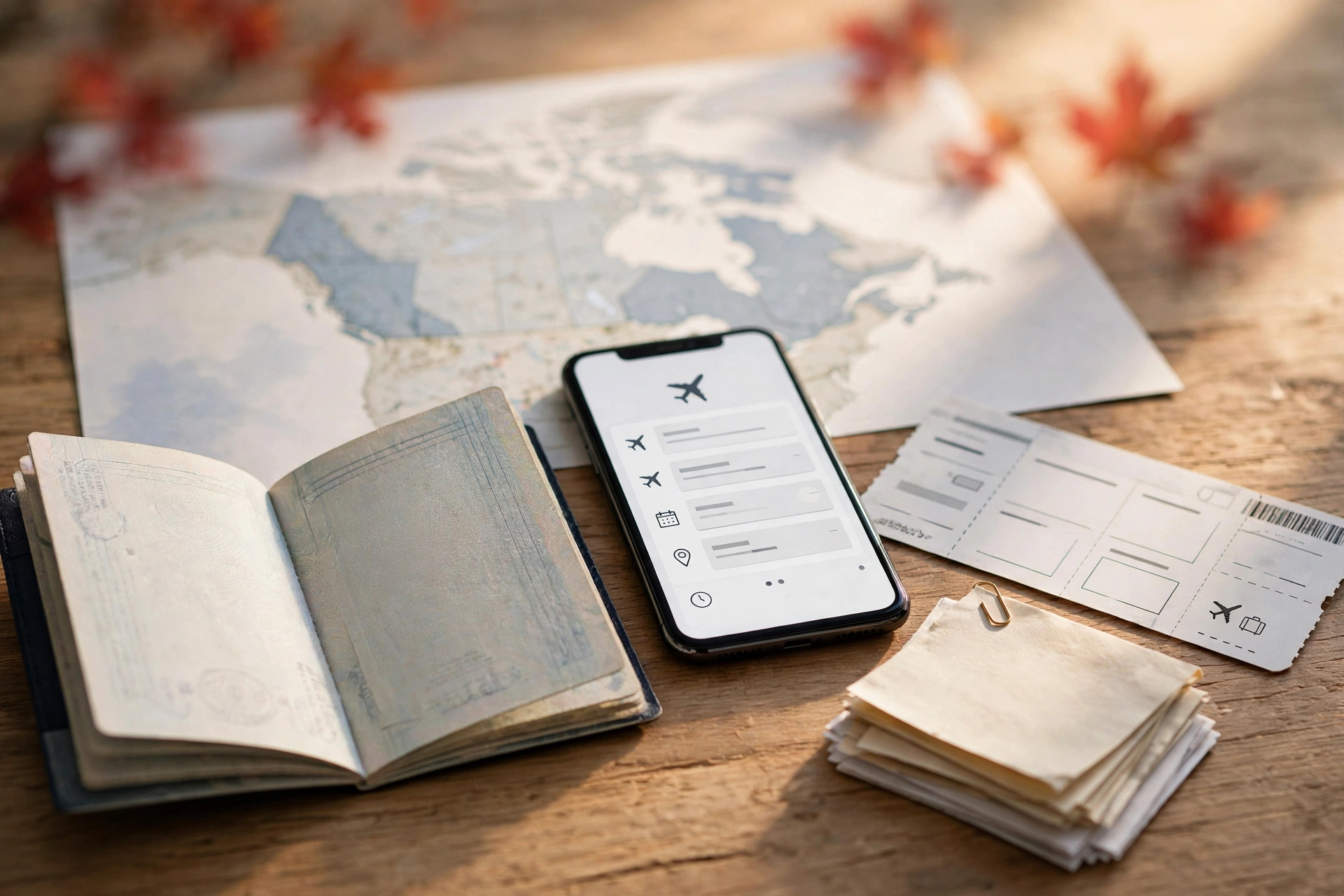
How the application works, step by step
1. Confirm which document you need — TRV or eTA — and that you are eligible.
2. Create an IRCC secure account and start the online application. Most people must apply online. Paper applications are only for those who cannot apply online — for example, because of a disability — or who travel on refugee or stateless documents.
3. Complete the forms carefully. Form IMM 5257 plus the family information form. Fill every field. Incomplete or inconsistent forms are one of the top reasons files stall or get refused.
4. Upload your documents. Follow the checklist, scan clearly, and translate anything not in English or French. Blurry or unreadable uploads count against you.
5. Pay the fees together. The $100 processing fee and the $85 biometrics fee are paid online at the same time. Keep the receipt — and remember it is non-refundable.
6. Give your biometrics. IRCC sends a biometric instruction letter; book an appointment at the nearest Visa Application Centre and attend promptly. Your application is not processed until IRCC has your biometrics.
7. Wait for the decision. If approved, you will be asked to submit your passport so the visa counterfoil — the sticker — can be placed in it. If refused, you receive a letter with the reason. Keep that letter: your next application must address it directly.
How long you will wait
Processing times move with application volume, the visa office handling your file, and the season. Check the current estimate for your country on IRCC’s official processing-times tool before planning around any number here. As a rough reference, mid-2026 reporting put the outside-Canada average at around 30 days — an average, not a promise for your country. The clock does not start until your biometrics are in.
The practical rule: apply several months before you intend to travel, and never book non-refundable flights against an assumed decision date.
Approved is not the same as admitted
A visa in your passport authorizes you to travel to the border — it does not authorize entry. A Canada Border Services Agency officer makes the final decision when you land and can refuse admission or set a shorter stay.
The standard grant is up to six months. Check your passport the moment the officer hands it back: if a date is written next to the stamp, that date is your deadline. If there is only a stamp, you have six months from the day you entered. If you need longer, you can apply to extend your stay from inside Canada — do it before your status expires, not after.
Parents and grandparents of Canadian citizens or permanent residents should also read the Super Visa question in the FAQ below — it may fit better than a standard visitor visa.
Why applications get refused
In 2026, immigration lawyer Evelyn Ackah put the visitor-visa refusal rate above 50 percent, and her red flags match what IRCC’s own guide warns about:
- Incomplete or inaccurate forms — blank fields, wrong dates, inconsistencies between forms.
- Missing, blurry, or wrong supporting documents — unreadable uploads, missing translations, proof that does not match the claim.
- Unclear employment or education history — gaps and overlaps the officer cannot reconcile.
- Inconsistent personal information — a name spelled one way on the passport and another on the bank statement.
- A weak or vague purpose of visit — the file never makes the trip feel real.
- Undisclosed past refusals or criminal history — the most damaging category, because hiding something is treated as misrepresentation.
The thread connecting all six: the officer’s job is not to prove you are dishonest. It is to be satisfied you are genuine. Every inconsistency, gap, or omission is a reason for doubt — and doubt, on its own, is enough for a refusal.
Frequently asked questions
How much does a Canada visitor visa cost in total?
Budget CAD $185 per adult: the $100 application fee plus the $85 biometrics fee. Families get caps — $500 maximum for the visa fee when five or more apply together, and $170 maximum for biometrics when two or more apply together. None of it is refunded if you are refused.
How long can I stay in Canada on a visitor visa?
Up to six months per visit is the standard grant, but the border officer decides the actual length when you arrive and may set a shorter period. The visa’s validity (up to ten years) is separate from how long each visit may last.
Can I work in Canada on a visitor visa?
No. A visitor visa does not authorize any work. If your plan involves employment — or study longer than six months — you need the proper permit before you travel.
How long does processing take?
It varies widely by country and season. IRCC’s processing-times tool gives the current estimate for your situation; mid-2026 reporting put the outside-Canada average at roughly 30 days. Apply several months before your intended travel date.
My application was refused. Can I apply again?
Yes — there is no mandatory waiting period. But you must pay all fees again, and a repeat application with the same documents is almost certain to fail. Read the refusal letter, fix the specific reasons it gives, and strengthen your ties-to-home evidence before reapplying.
Is the visitor visa the same as the Super Visa?
No. The Super Visa is only for parents and grandparents of Canadian citizens or permanent residents. It costs the same $100 fee but allows stays of up to five years per visit on a multiple-entry visa valid up to ten years, and it requires private medical insurance meeting IRCC’s minimum coverage.
The bottom line
A Canada visitor visa is won or lost on the quality of the file, not the price of the fee. Know which document you need, pay the correct fees once, build a consistent story around purpose, money, and ties to home — and apply early enough that a slow month at the visa office does not ruin your plans. And if your ambitions go beyond a visit, our guide to Canada Express Entry explains the skilled-worker route to permanent residence.
For the authoritative versions of every rule and figure in this article, start with IRCC’s official visitor visa application guide and the IRCC 2026 overview of temporary immigration. Rules and fees can change; the government site is the final word.